What is on this page
1. Words we use
Some words on this page are hard. Here is what they mean.
- ForumA meeting with many people. People come together to talk about a problem.
- MigrantSomeone who leaves their country to live in another country. Many people move to find work.
- RefugeeSomeone who had to leave their country because it was not safe to stay.
- Persons with disabilitiesPeople who have a disability. Some disabilities you can see. Some you cannot see.
- OPDAn organisation of persons with disabilities. It is a group run by persons with disabilities, for persons with disabilities.
- CRPDA promise that countries around the world made. They promised to respect the rights of persons with disabilities.
- InterpreterSomeone who says the words again in your language, so you can understand.
- International SignA sign language that deaf people from different countries can use together.
- CaptionsWords on the screen that show what people are saying.
- AlbinismWhen a person has very little colour in their skin, hair and eyes. Many people with albinism cannot see well.
2. What the forum was

This forum was an online meeting with many people.
People from all over the world joined.
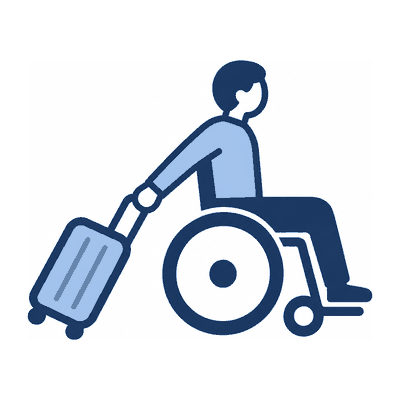
The meeting was about persons with disabilities who move to another country.
Some people move to find work.
Some people move because it is not safe at home.
Moving to another country can be very hard for persons with disabilities.
The rules can stop them getting work.
The rules can stop them getting help they need.
Persons with disabilities ran this forum.
This is important. It means persons with disabilities decided what we talked about.
3. When and where it was

The forum was on 2 days:
Wednesday 23 September 2026
Thursday 24 September 2026

The forum was online.
People joined on a computer, a tablet or a phone.
Nobody needed to travel.

It was free.
Nobody paid any money.

The forum was in the morning, United Kingdom time.
In other countries, it was a different time.
4. Why we had this forum
Countries have rules about people moving between countries.
Countries also made promises about the rights of persons with disabilities.
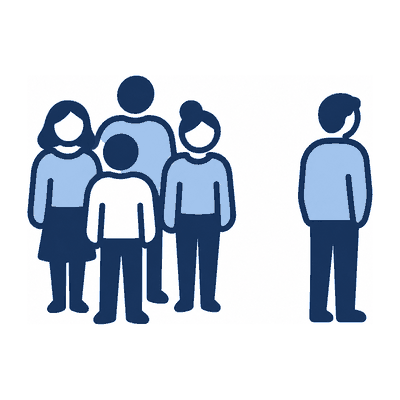
But the rules often forget persons with disabilities.
People who make the rules do not always think about disability.
Some people get a disability while they are moving.
This can happen because of violence.
This can happen because they are locked up.
This can happen because they cannot see a doctor.

People who work on disability and people who work on migration do not talk to each other enough.
We want to change that.
5. Some numbers
304 million people live in a country they were not born in.
167 million of them moved to find work.
38 million people had to leave their country because it was not safe.
1 billion 300 million people in the world are persons with disabilities.
That is about 16 people out of every 100 people.

Nobody knows how many persons with disabilities move to another country.
Nobody counts them properly.
This is a problem. It is hard to help people you do not count.
6. What we wanted to happen
We wanted 4 things from this forum.

1. Join up the rules
We wanted to look at the migration rules together.
We wanted to see how they help persons with disabilities, and how they do not.

2. Show what goes wrong
We wanted people to hear real stories.
We wanted to show how the rules hurt persons with disabilities.

3. Listen to persons with disabilities
Persons with disabilities must be part of the talking.
Not just listened to. Part of deciding.
4. Say what needs to change
We wanted a clear list of things that must get better.
7. Day 1: Wednesday 23 September
There were 2 talks on Day 1
Talk 1: How we got here
The full name of this talk was: Disability in Migration and Forced Displacement: The Foundations.
We looked back at the past.
Persons with disabilities have been treated badly for a long time.
We looked at how this still happens today.
We looked at what the migration rules say, and how the rules could help.
Led by Catalina Devandas Aguilar. She used to work for the United Nations on disability rights.
30 minute break
A rest. People could get a drink or move around.
Talk 2: Persons with disabilities and work in another country
We talked about persons with disabilities who move to find a job.
It can be hard to get hired.
It can be hard to be safe at work.
It can be hard to get help if something goes wrong.
We heard about this from Asia, Australia, South Korea and Poland.
Led by Rebecca Napier-Moore from the International Labour Organization.
8. Day 2: Thursday 24 September
There were 3 talks on Day 2
Talk 3: What we can learn from groups of persons with disabilities
Groups of persons with disabilities have fought for change for many years.
We talked about what worked.
We talked about how groups can speak to the people who make the rules.
Led by Atty. Rhealeth Ramos from the National Council on Disability Affairs in the Philippines.
30 minute break
A rest. People could get a drink or move around.
Talk 4: Persons with disabilities in refugee camps
A refugee camp is a place where people live after they leave their country.
Life in a camp is very hard for persons with disabilities.
We heard from Ibrahim Basubi. He is a refugee with a disability who has lived in a camp.
He told us what needs to change.
Led by Julius Ntobuah from the Global Network of Refugees with Disabilities.
30 minute break
A rest. People could get a drink or move around.
Talk 5: When the system makes people disabled
This talk was about rich countries like the United Kingdom and the United States of America.
The rules in these countries can stop people getting food, a home, or a doctor.
This can make people unwell.
We heard how persons with disabilities help each other and fight back.
Led by Bridget Anderson from the Disability and Migration Network.

Every talk had short breaks in the middle.
Every talk had time for questions.
You can see the full list of times on the main website.
9. Who spoke
These people spoke at the forum.
- Lucia D’ArinoShe works for the International Disability Alliance. She explained how to join in at the start of each day.
- Catalina Devandas AguilarShe used to work for the United Nations on disability rights.
- USEC Atty. Darlene R. PajaritoShe works for the government of the Philippines, on people who go abroad to work.
- Ben ThatcherHe helped start the Disability Migration Network.
- Amalia GamioShe is on the United Nations group that checks how countries treat persons with disabilities.
- Leana PodeszfaShe works for the United Nations on refugees. Her job is to include persons with disabilities.
- Katerine LanduytShe works for the International Labour Organization on people who move for work.
- Rebecca Napier-MooreShe works for the International Labour Organization in Asia.
- Matthew HallHe works for a group of organisations of persons with disabilities in Australia.
- Ju-eun LeeJu-eun Lee is a lawyer in South Korea. Ju-eun Lee helps persons with disabilities go to court.
- Dr Eva Anna Duda-MikulinShe is a teacher at a university in Poland.
- Atty. Rhealeth RamosShe works for the disability office of the government in the Philippines.
- José Maria VieraHe works for the International Disability Alliance.
- Mak MonikaShe leads an organisation of persons with disabilities in Cambodia.
- Julius NtobuahHe leads the Global Network of Refugees with Disabilities.
- Rosa Maria JuarezShe works with groups of persons with disabilities in South America.
- Ibrahim BasubiHe works with the Africa Disability Center. He talked about life in a refugee camp.
- Muluka-Anne Miti-DrummondShe works for the United Nations. Her job is the rights of people with albinism.
- Bridget AndersonBridget Anderson works with the Disability and Migration Network. Bridget Anderson led Talk 5.
- Dr Rebecca YeoShe works with the Disability and Migration Network in the United Kingdom.
- Dr Benjamin BernandinoDr Benjamin Bernandino works with the Disability Migration Network. Dr Benjamin Bernandino closed the forum.
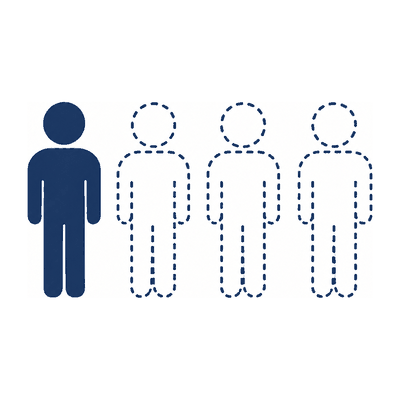
Some speakers did not use their real name.
This was to keep them safe.
10. Who the forum was for
Anyone could come. We wanted these people to come:
- Persons with disabilities who have moved to another country
- Organisations of persons with disabilities
- People who make the rules about moving between countries
- People who work for the United Nations
- Groups for workers, and groups for bosses
- People who study these problems at universities
- People who give money to help
- Anyone who wants to help make things better
11. What happens next

We do not want to just talk.
We want things to change.

We are sharing what we learned at the forum.
The slides from each talk are on the main website.
There are also things to read.
12. Who ran the forum
4 groups ran the forum together. All 4 groups are run by persons with disabilities.
- Global Network of Refugees with DisabilitiesThey help groups of refugees with disabilities speak up and get money for their work.
- Korean Disability ForumThey are 18 groups of persons with disabilities in South Korea working together. They check that the government keeps its promises.
- Disability Migration NetworkThey work on the right of persons with disabilities to move to another country.
- Disability and Migration NetworkThey are groups of persons with disabilities and migrant groups in the United Kingdom. They help each other and fight unfair rules.
Who paid for the forum
2 organisations paid for the forum.
The International Disability Alliance.
The International Labour Organization.
13. Help to join in
We wanted everyone to be able to join in. Here is the help we had.

Interpreters
Someone said the words in your language.
We had 10 languages:
Spanish, French, Arabic, Swahili, Korean, Vietnamese, Thai, Lao, Myanmar and Khmer.

Sign language
We had International Sign.
The interpreters took turns so they did not get tired.

Captions
Words showed on the screen.
People could read what was being said.
Someone to help
If the computer did not work, someone helped.
People could ask for help at any time.

Breaks
There were breaks in every talk.
People could leave their camera off.
People could join for only the parts they wanted.
14. Videos and getting in touch

Before the forum, people signed up on a form.
Signing up is closed now.

Videos are coming soon
We are getting videos of the 5 talks ready.
We will put them on this website.

If you need help
If something on this page is hard to understand, tell us.
If something on this page does not work, tell us.
We will fix it.